Loyalty program strategy
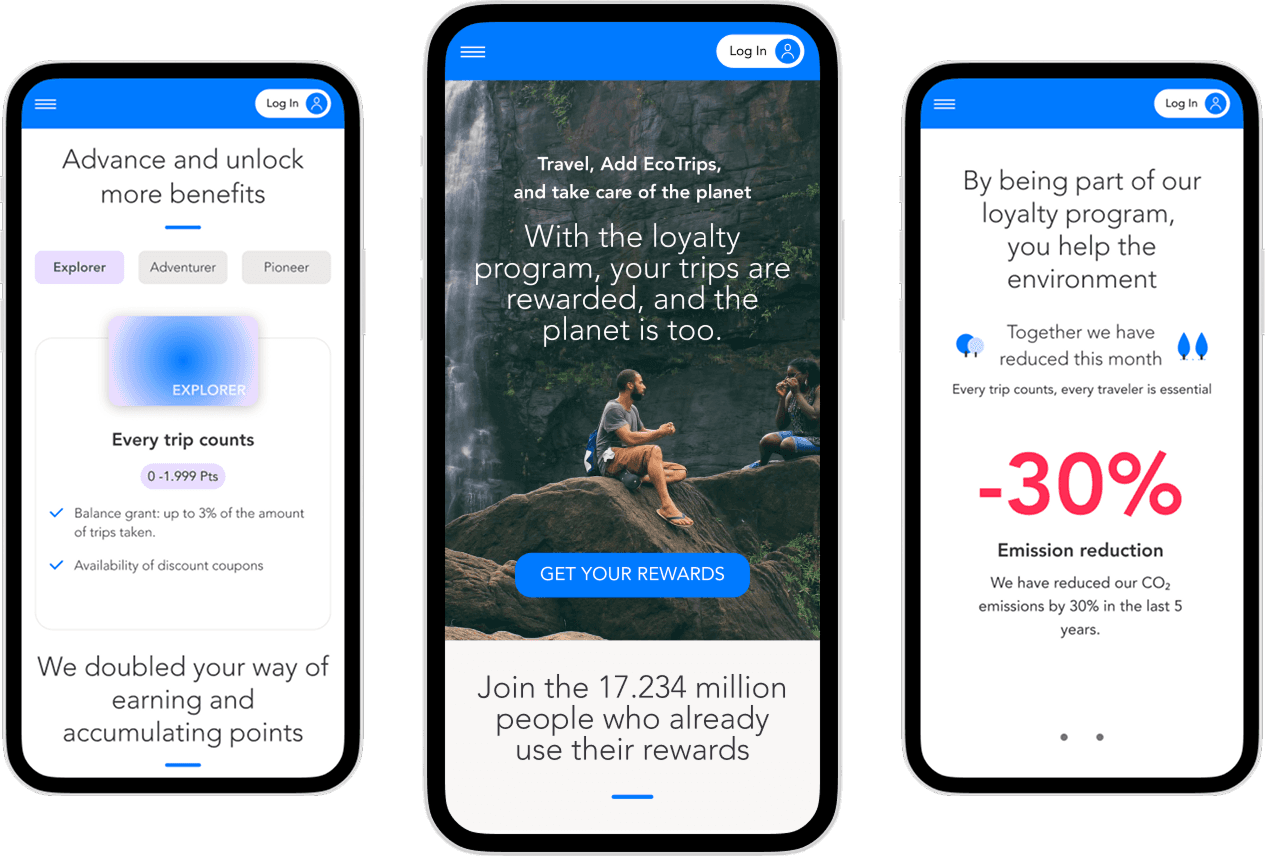
Comprehensive behavioral research and gamified loyalty strategy for major transportation operator. Multi-phase research identified distinct user archetypes and designed scientifically-backed engagement framework launching 2026.
Transportation
2024
Travel
588M
17,000+
Challenge
Major European transportation company with millions of annual users needed to shift from transactional relationships to long-term retention and recurrence. Their existing "one-size-fits-all" loyalty approach lacked psychological differentiation between user types, created no emotional connection, and missed opportunities for behavioral influence through gamification.
Core problem identified
Treating diverse travel motivations with identical engagement strategies, ignoring fundamental psychological differences between user segments.
Process
Phase 1: Behavioral Analysis & Desk Research
Conducted systematic analysis of existing customer touchpoints and pain points
Applied cognitive psychology frameworks to map decision-making patterns
Performed competitive audit of 15+ loyalty programs across industries
Analyzed psychological mechanics and engagement strategies from transportation, retail, gaming, and finance sectors
Established baseline understanding of behavioral economics principles applicable to loyalty design
Key Deliverable: Competitive psychology analysis report + behavioral framework foundation
Phase 2: Quantitative Research & Data Analysis
Designed and executed large-scale survey methodology targeting 1,000+ users
Implemented statistical analysis to segment users by psychological motivations (not demographics)
Analyzed 18 months of historical booking and engagement data
Created detailed user journey maps highlighting emotional states and decision points
Validated behavioral hypotheses through data triangulation
Key Deliverable: User segmentation model + behavioral pattern analysis
Phase 3: Living Laboratory & Contextual Research
Conducted "Laboratorios Vivos" (Living Labs) - real-world testing during actual travel experiences
Performed contextual inquiry at key touchpoints: booking, boarding, traveling, arriving
Observed authentic behaviors in natural context vs. stated preferences
Gathered qualitative insights about emotional responses and unmet psychological needs
Implemented rapid iteration cycles to test behavioral hypotheses
Key Deliverable: Ethnographic research findings + contextual behavior insights
Phase 4: Strategic Framework & Solution Design
Applied Octalysis behavioral framework methodology to design engagement mechanics
Developed comprehensive "Rueditas" (Little Wheels) loyalty architecture
Created three-tier gamified progression system (Bronce, Plata, Oro)
Designed behavioral intervention specifications for each tier
Built implementation roadmap with measurement framework
Key Deliverable: Complete loyalty strategy framework + implementation specifications
Key Research Findings
Two Distinct Behavioral Archetypes Identified
TRAVELERS (Experience-Driven)
Psychology: Journey as symbolic experience
Motivations: Plans with friends, exploring places, family visits
Values: Ability to bring everything needed, ease and safety
Pain Points: Lack of inspiration, poor planning support, no community feeling
Opportunity: Satisfaction heavily influenced by journey start/end experience
COMMUTERS (Efficiency-Driven)
Psychology: Journey as functional necessity
Motivations: Work, studies, routine obligations
Values: Practicality, control, comfort, reliability
Pain Points: No loyalty recognition, inflexible booking, identical treatment
Opportunity: High frequency usage but low brand emotional connection
Critical Insight: These aren't demographic differences - they're psychological motivation differences requiring completely different engagement strategies.
Behavioral Science Framework
Core Drives Implemented:
Epic Meaning & Calling: Environmental impact tracking, sustainable travel community
Development & Accomplishment: Clear progression, meaningful milestones, achievements
Creativity & Feedback: User-generated content, customizable itineraries, feedback loops
Ownership & Possession: Personal profiles, family linking, accumulated benefits
Social Influence: Friend referrals, travel groups, community reviews, rankings
Scarcity & Impatience: Flash sales, exclusive access, seasonal challenges, FOMO triggers
Unpredictability: Lucky wheel, surprise upgrades, mystery destinations, variable rewards
Loss & Avoidance: Benefit expiration warnings, "last chance" messaging
Key learnings
1. Research Depth Drives Strategic Value Multi-method behavioral research revealed insights that traditional user research would miss. Understanding psychological motivations (not just demographics) enabled targeted intervention design.
2. Gamification Requires Scientific Rigor Effective gamification isn't about adding points and badges - it's about systematically applying behavioral psychology principles to drive specific behaviors.
3. One Size Never Fits All The most important finding was that two user types needed fundamentally different engagement strategies. A unified approach would fail both segments.
4. Implementation Planning Is Part of Strategy Research without actionable implementation roadmap is academic. Phased approach with clear metrics made the strategy executable.